Commissions
I am once again opening commissions, but my practice has shifted since my last offerings. The services are similar but now more aligned with my path of Viadescioism, which has […]
The Cult Of Lexi The Wulf
I am once again opening commissions, but my practice has shifted since my last offerings. The services are similar but now more aligned with my path of Viadescioism, which has […]
One intriguing concept in Viadescioism is “Neopraxism.” This term, unique to the practice, represents the creation of a new spiritual practice distinct from other established traditions. The term itself is derived from “Neo” (new), “praxi” (practice), and “ism” (a distinctive system or philosophy). It signifies the development of a personal, individualized tradition, diverging from the traditional, eclectic, or syncretic approaches […]
In Viadescioism, an intriguing concept is the practice of Baa’wa, which involves ritualistic bowing. This act includes lowering the torso and head towards another person or symbol, typically by 30 degrees. It is primarily used to express respect, deference, veneration, apology, and gratitude. The significance of Baa’wa extends beyond mere physical expression; it represents a spiritual technique through which an […]
Viadescioism is indeed an open path. It is accessible to anyone who wishes to work within it. However, to effectively utilize and understand Viadescioism, individuals are encouraged to initiate themselves into the practice. This initiation is a way of preparing oneself and ritually attaching to the tradition. It helps in grasping the coherent understandings that are integral to the practice. […]
Overview Viadescioism is a contemporary spiritual and philosophical system rooted in the synthesis of various religious, spiritual, and magical traditions. It is a path that emphasizes the interconnectedness of all things, the practice of ritual, and the pursuit of understanding and enlightenment. The system draws from a diverse range of sources, including but not limited to, traditional pagan, shamanic, and […]
In Viadescioism, nature holds a profoundly significant role, reflecting a deep connection between the spiritual and the natural world. This connection is rooted in the understanding that everything in the […]
Knala Knala, in the context of Viadescioism, represents a comprehensive term encompassing various spiritual concepts such as Conduit, Sacred Spaces, Halidom, Holy Places, Sanctuary, Chapel, Relics, Holy Things, Shrines, Tower, […]
Viadescioism identifies eight distinct schools of Rites, each focusing on a unique aspect of transformation and change: Each of these schools is meticulously studied and mastered by practitioners of Viadescioism. The adept develops a comprehensive understanding and skill set, enabling them to bring about significant changes in the world.
The divines, known as the Yamasa Ona in Viadescioism, exist not beyond but within our world. They are present in everything, embodying the sacred and the mundane as facets of […]
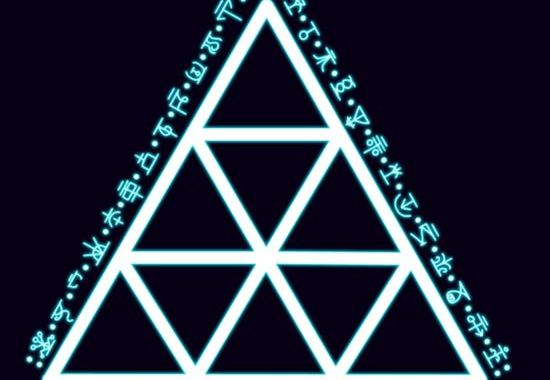
Xalaqa, a central symbol in Viadescioism, embodies the concept of divinity through its distinctive geometric design. This symbol, also referred to as the tetractys, is characterized by a triangle composed […]
Viadescioism is a unique blend of religion, philosophy, and practice, distinguished by its foundational principles and concepts. At the heart of Viadescioism are three critical elements: the Ten Divines, the […]
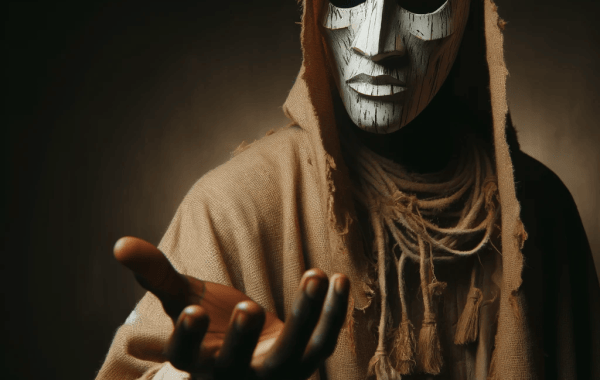
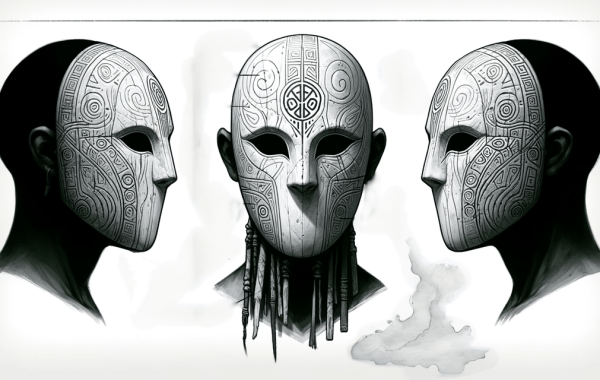
In Viadescioism, wearing masks is a crucial aspect of its culture and tradition. This practice, rooted in divine depictions, involves practitioners adopting the ‘kna’ (essence) of a ‘yamasa’ (Divines) for […]
Imani, celebrated on the seventh day of Kwanzaa (December 31st), stands for “Faith” in Swahili. This principle, pronounced Eee-maun-ee, emphasizes faith in our people, parents, teachers, leaders, and the collective struggle of the African-American community. Imani calls for a deep and enduring belief in the communal values, culture, and the resilience of the community. Imani is more than just religious […]
Kuumba pronounced koo-OOM-bah, it translates to “Creativity” in Swahili. The essence of Kuumba is to always do as much as we can, in the way we can, to leave our community more beautiful and beneficial than we inherited it. This principle is not just about artistic creativity but also about innovating and problem-solving in ways that enhance the community. This […]
Nia, celebrated on the fifth day of Kwanzaa, emphasizes the principle of Purpose. This principle is about making a collective vocation to build and develop the community, aiming to restore people to their traditional greatness. Nia represents a commitment to remembering and honoring the legacy of ancestors and ensuring this heritage is passed on to future generations. The joining of […]
Ujamaa, the fourth principle of Kwanzaa, pronounced oo-JAH-mah, emphasizes the concept of Cooperative Economics. Celebrated on the fourth day of Kwanzaa, this principle is centered around building and maintaining communal stores, shops, and businesses to profit together. It embodies the value of using collective energy to economically benefit the community, focusing on the sharing of wealth and work, beginning within […]
Ujima, the third principle of Kwanzaa, celebrated on December 28th, is a powerful concept that emphasizes collective work and responsibility. Pronounced oo-jee’-ma, Ujima represents a commitment to active and informed togetherness in addressing common community issues. This principle encompasses the idea that the community’s problems are shared by all and must be solved together. The symbol associated with Ujima is […]
Kujichagulia, or Self-Determination, is the second principle of Kwanzaa, celebrated on December 27th. Pronounced koo-jee-chah-GOO-lee-ah, this principle emphasizes the importance of defining, naming, creating, and speaking for oneself. It represents the right and responsibility to shape one’s own destiny and daily life, fostering a strong sense of identity and autonomy within the African-American community. The Ahenwa, the Akan throne, is […]
Umoja, the first principle of Kwanzaa, is a powerful concept emphasizing unity within the family, community, nation, and race. The principle, pronounced oo-mo’-ja, is celebrated on the first day of Kwanzaa, which begins on December 26th. It embodies the idea of striving for and maintaining unity, a key aspect of the holiday’s focus on family and community bonds. The Dagi […]
Each principle plays a vital role in strengthening community ties and fostering a sense of cultural pride and unity.
Kwanzaa, an annual holiday celebrated primarily in the United States from December 26 to January 1, emphasizes the importance of pan-African family and social values. It was devised in 1966 by Maulana Karenga, Inspired by Africa’s harvest celebrations, he decided to develop a nonreligious holiday that would stress the importance of family and community while giving African Americans an opportunity […]
My understanding of the world’s cosmology has evolved significantly throughout my spiritual practice. Initially, I embraced a neo-pagan view, picturing an underworld. However, influences from theosophy and New Age thought led me to consider other planes of existence, particularly the astral plane. Over time, this concept didn’t align well with my other beliefs. Now, my practice acknowledges the physical, mental, […]
I see less life and death and more being and becoming as constructs and entities exist, and get transformed throughout the many different facets of their beings. An infinite amount of forms holding their individualistic and intersectional aspects of being at many different times, and places while living through a more general temporal path. Being brought together through life, and […]
Initially, I came on to online occult spaces to have a place to record my understandings, get feedback, and learn more from other practitioners. But sometime in the Tumblr days, I lost that, and I wanted to become more of an occult content creator. This was primarily because everyone around me at the time was doing it, and it was […]
I have found out how useful it is to build personal mythology around my personal divines, since they come from me and do not have mythos. It is useful to associate them in stories in order to see how their nature interacts, and can be explained by those stories. The stories also help me to remember them, how they manifest […]
Honestly, I think I just want more magical theory. Like I want to hear about individuals metaphysics and cosmology and how that applies to their worldview and outlook on casting. I want weird and interesting ideas that may or may not be practical but have well-thought-out magical substance. I want things people have experimented doing that no one else has done and terminology that […]
This vault is of the Whare Ra Temple in New Zealand, which operated throughout the 20th century and closed in 1978. Whare Ra was one of the last surviving temples […]
The term “old soul” is closely associated with the Michael teachings, a metaphysical belief system that originated in the 1970s. The Michael teachings were channeled through spiritual mediums, who claimed to receive information from a group of discarnate entities known as “Michael” or “the Michael entity.” According to the Michael teachings, souls progress through different stages of development as they […]
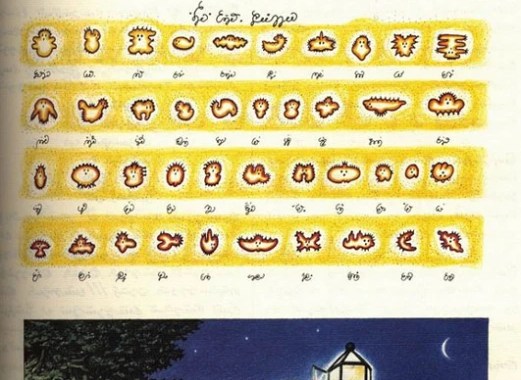
One of my primary inspirations for my grimoire is a book called Codex Seraphinianus. This work presents itself as an encyclopedia of an entirely fictional world, written in an undecipherable, […]
The concept of incubation holds great significance for me, drawing inspiration from practices like necromantic incubation and Temple incubation. In the former, individuals would rest or sleep atop graves, seeking a connection with the deceased, while in the latter, they would slumber in sacred places to gain visions or divine connections. For me, the idea of incubation extends beyond specific […]
Documentation is essential for my practice. When I experience or learn new things, I promptly take notes. I later transfer these notes to my grimoire. This continuous documentation helps me maintain a consistent record of my experiences and understandings. I don’t limit what I write down to just metaphysical, epistemological, and ethical insights. I include anything I find sacred or […]
Viadescioism, my practice is inherently pantheistic and animistic. Because of this I find that the practice of masking in relation to the divines, the ancestors, the animals, the archetypal nature of kna(energy) and shaknao ona(souls) is a practice that comes up and is demonstrated in a lot of my rituals and acts as a form of divine absorption or shapeshifting. […]
I primarily refer to my gods as divines instead of gods or deities and I believe I primarily do this in order to separate my concept of divinity from the more Western Christian understanding of it that is present within the United States. This is definitely a way of controlling language on my part and is used to help to […]
“Haint blue is a range of pale, blue-green colors that are often used to paint porch ceilings in the Southern United States. The tradition originated with the Gullah people in Georgia and […]
The Black Karate Federation (BKF) emerged as a response to the events surrounding a pivotal tournament held in 1969, which featured a match between two prominent martial artists, Joe Lewis […]
What I’ve discovered through the process of writing my grimoire is that it’s equally essential to explain why something is omitted from my practice as it is to detail what’s included. This is particularly important to me because I prefer not to leave gaps in my understanding. I’ve already arrived at conclusions about why I’ve chosen one path over another, […]