All
Kicking and knocking
“Kicking and Knocking,” also known as “Knockin,” “Knock boxing,” or “yuna onse,” is a little-known but historically significant African-American martial art. Its roots trace back to the era of slavery […]
 The Cult Of Lexi The Wulf
The Cult Of Lexi The Wulf

“Kicking and Knocking,” also known as “Knockin,” “Knock boxing,” or “yuna onse,” is a little-known but historically significant African-American martial art. Its roots trace back to the era of slavery […]
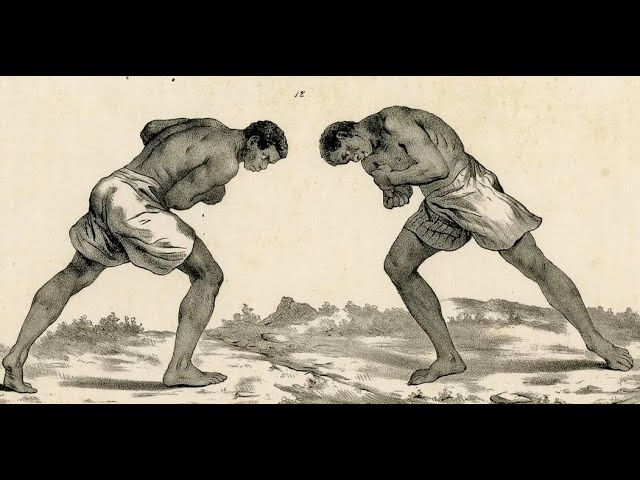
“Kicking and Knocking,” also known as “Knockin,” “Knock boxing,” or “yuna onse,” is a little-known but historically significant African-American martial art. Its roots trace back to the era of slavery in the United States, particularly in South Carolina and Virginia.
“Knocking” in this context refers to a specific technique resembling a charging headbutt, reminiscent of African cattle, producing a distinct “knock” sound upon impact. Although related, knocking and kicking were often distinct practices within the art form.
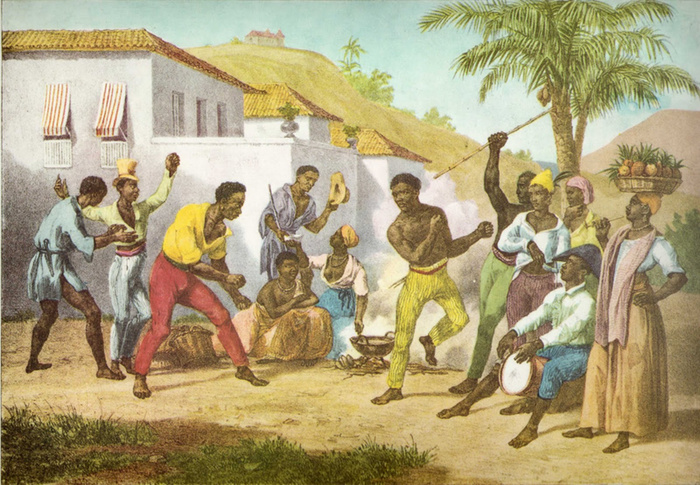
Music and acrobatic movements were integral to “Kicking and Knocking,” making it inseparable from dance. It was traditionally performed within black communities to the rhythm of drums, clapping, or reed pipes known as “quills.” This art form likely has connections to other African martial arts like Engolo, and shares similarities with capoeira and danmyé ladjia.
“The Sabbath is not regarded by a large number of the slaves as a day of rest. They have no schools to go to; no moral nor religious instruction at all in many localities where there are hundreds of slaves. Hence they resort to some kind of amusement. Those who make no profession of religion, resort to the woods in large numbers on that day to gamble, fight, get drunk, and break the Sabbath. This is often encouraged by slaveholders. When they wish to have a little sport of that kind, they go among the slaves and give them whiskey, to see them dance, “pat juber,” sing and pay on the banjo. Then get them to wrestling, fighting, jumping, running foot races, and butting each other like sheep. This is urged on by giving them whiskey; making bets on them; laying chips on one slave’s head, and daring another to tip it off with his hand; and if he tipped it off, it would be called an insult, and cause a fight. Before fighting, the parties choose their seconds to stand by them while fighting; a ring or a circle is formed to fight in, and no one is allowed to enter the ring while they are fighting, but their seconds, and the white gentlemen. They are not allowed to fight a duel, nor to use weapons of any kind. The blows are made by kicking, knocking, and butting with their heads; they grab each other by their ears, and jam their heads together like sheep. If they are likely to hurt each other very bad, their masters would rap them with their walking canes, and make them stop. After fighting they make friends, shake hands, and take a dram together, and there is no more of it.” – Henry Bibb, 1849
Henry Bibb, born to a white father and a slave mother in Shelby County, Kentucky, in 1815, and was held in slavery in Kentucky, Louisiana, and in present-day Arkansas. In 1837, he escaped through Ohio and Michigan into Canada.

Occult Practitioner | Black | Nonbinary | Genderfluid | They/Them | Wolf Therian | Pan | Viadescioism
 The Cult Of Lexi The Wulf